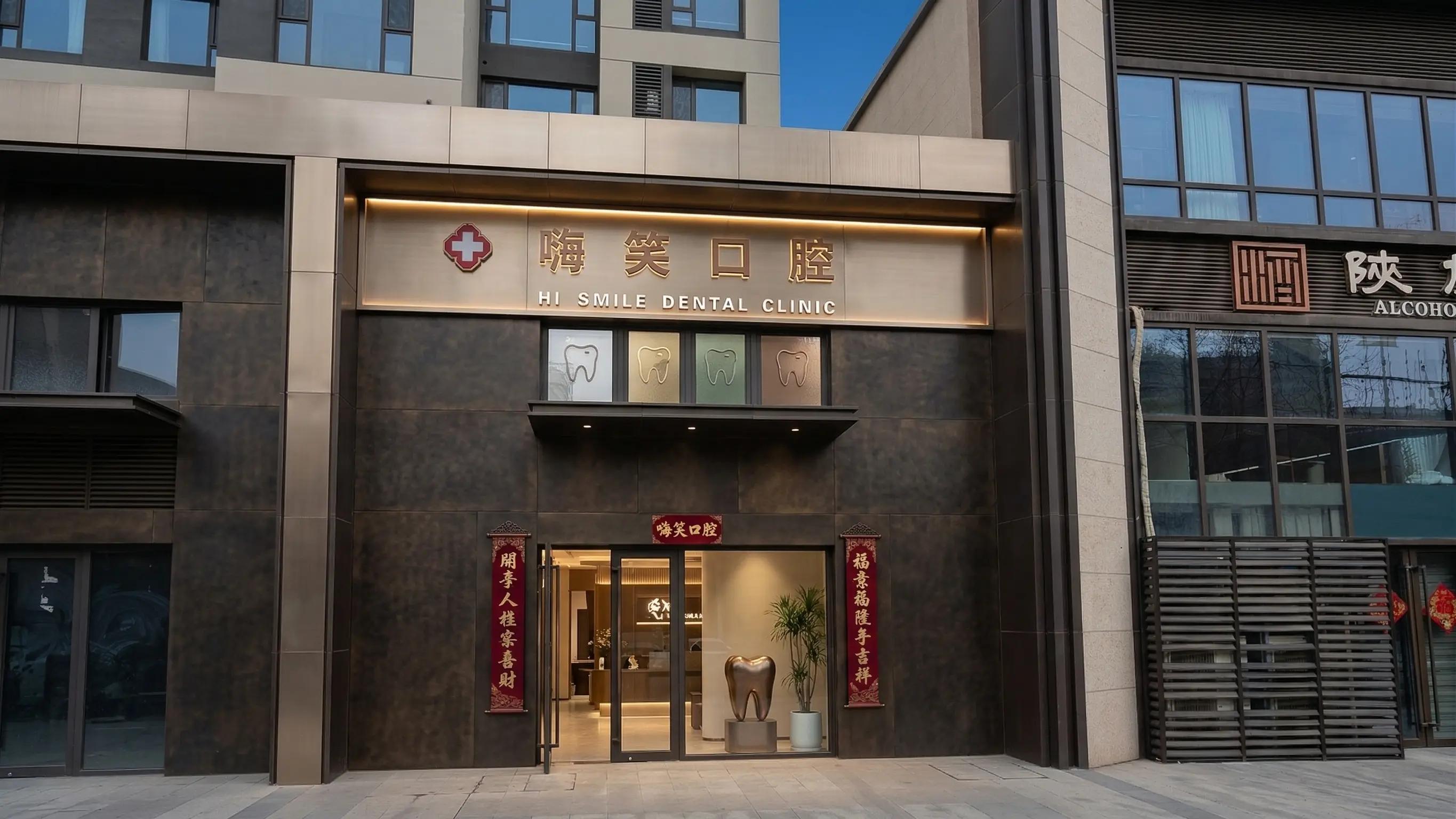
Late last year, our highly anticipated dental clinic was finally born.Dr. Song is not only the head of this clinic but also my wife. Seeing her shine in her beloved career of orthodontics and dentistry was the greatest driving force behind my full support for her entrepreneurial journey.
Setting up a clinic is far more complex than one might imagine. Starting mid-year, we embarked on a long journey of site selection. To balance family and career, and to leverage the "familiarity effect" of a close-knit neighborhood, we spent nearly three months thoroughly researching the real estate market within a three-kilometer radius before finally securing our ideal location.
Throughout this process, I—a complete layman previously unacquainted with the dental industry—was forced to become somewhat of an expert. Since no one in our entire family had any business experience, I had to rely on my engineering mindset to draw up a long checklist from a business planning perspective: licensing and compliance, capital investment, recruitment, the long-term professional development of our doctors, and even the balance between family life and the number of dental chairs... Every single item required careful deliberation.
Fortunately, professional matters are best left to professionals. We hired a domestic team specialized in the design and construction of dental clinics, which saved us from countless trivial renovation hassles. Meanwhile, I devoted all my energy to the clinic's "main event"—equipment procurement.
Cross-Industry Procurement from Scratch: Ignoring the Halo Effect, Focusing on Specs and Reputation
From major investments like a CBCT machine down to the smallest endodontic file, my wife made the list, and I was in charge of "treasure hunting" in the market. As a mechanical designer with years of experience, I possess a stubbornness typical of engineers: I don't blindly worship brand halos; I only believe in cold, hard specs, practical functionalities, and authentic industry word-of-mouth.
To get to the bottom of things, I didn't just toss the list to suppliers for quotes. Instead, I personally attended major domestic dental equipment exhibitions. It was at one of these expos that the innovative design of a Chinese-made device completely subverted my perception of domestic medical equipment.
At the time, we were stressing over the selection of X-ray equipment. Based on clinical needs, we required a "3-in-1" imaging system capable of Panoramic, Cephalometric, and CBCT scans. Simultaneously, we needed the capability to take intraoral radiographs. Out of strict health and safety concerns, my wife immediately ruled out handheld intraoral X-ray devices due to potential radiation exposure risks, a decision I fully supported.
However, reality dealt us a heavy blow. Here, I need to explain to our overseas peers a unique and extremely strict medical regulatory policy in China: In many Western countries, an intraoral X-ray machine might simply be mounted next to the dental chair in an open operatory, allowing doctors to take images on the fly. But in China, under the state's mandatory compliance requirements for radiological diagnosis and treatment, no independent, fixed radiological equipment (even an intraoral X-ray with minimal radiation) is allowed to be installed in an open space. It must be housed in an independent, radiation-shielded room equipped with lead-lined walls and a lead door, and it strictly requires a dedicated control computer located outside the radiation zone.
This meant that if we purchased a conventional "3-in-1" CBCT on the market and bought a separate wall-mounted intraoral X-ray unit, we would have to sacrifice precious square footage in our already space-constrained clinic just to build another independent, lead-shielded room. This wouldn't just mean spending money on an extra piece of equipment; it would also incur hefty specialized renovation and construction costs, drastically compressing our actual treatment space.
"Smart Manufacturing in China" Truly Solving Clinical and Compliance Pain Points
Just when I was at my wits' end, I stumbled upon a "4-in-1" CBCT at a Chinese manufacturer's booth that can only be described as a "Space Magician"!
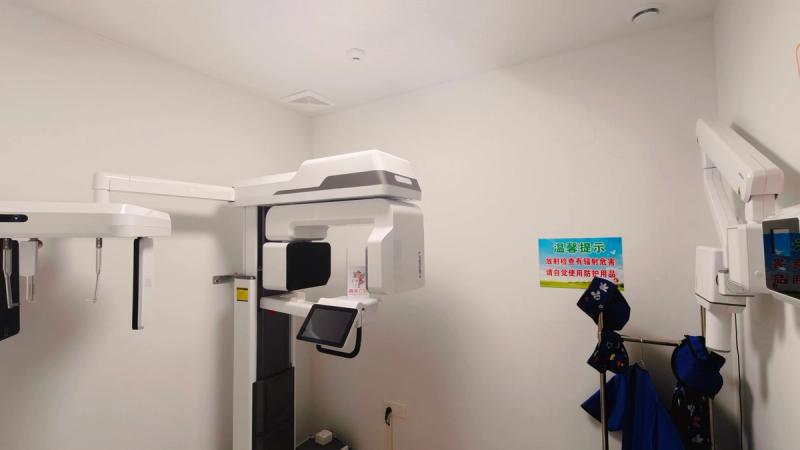
It ingeniously integrated the fixed intraoral X-ray generator directly onto the CBCT unit, forming a comprehensive imaging system that shares a single control computer. This seemingly simple physical integration perfectly solved our dilemma: Because it is physically classified as "one" machine, it only needs to be placed in the single, pre-planned radiation-shielded CBCT room. This not only satisfied China's incredibly strict compliance and shielding requirements but also astutely saved the space of an entire independent room and the cost of an extra control computer. This kind of flexible micro-innovation—closely tailored to both clinical needs and policy environments—made even a seasoned mechanical designer like me marvel in admiration.
Without a moment's hesitation, I pre-ordered the device on the spot, and while I was at it, I also ordered three Chinese-made dental treatment units and a complete set of sterilization equipment at the expo.
Instruments as an Extension of the Hand: The Case for Chinese Dental Excellence
Accompanying my wife on this journey, I've come to a profound realization: Instruments are the extension of the dentist. High-quality equipment not only acts as a force multiplier for the doctor but also ensures a comfortable and safe experience for the patient. If the equipment is unstable, even a minor malfunction in a water or air valve can disrupt the doctor's workflow and impact the clinic's operations.
This in-depth procurement experience made me genuinely feel that China's medical equipment industry is currently undergoing an astonishing transformation.
In the dental industry, we once looked up to major European and American international brands. But today, outstanding Chinese medical equipment has acquired formidable global competitiveness through technological accumulation and advanced manufacturing processes. Whether in imaging clarity, operational fluidity, or equipment durability, Chinese devices not only possess the strength to compete neck-and-neck with top-tier international brands, but they also maintain a significant lead in micro-innovations aimed at "solving actual pain points."
For clinic operators like us—who pursue efficiency, stability, and careful cost control—those Chinese instruments that have been refined through high-intensity use in massive domestic public hospitals and grassroots clinics demonstrate an absolute dominance in cost-effectiveness. They deliver uncompromised, or even superior, performance at a much more reasonable budget.
Supporting my wife's dream unexpectedly opened the door to the dental industry for me; meanwhile, the pragmatism of an engineer allowed me to witness the highlight moment of Chinese dental equipment. Choosing highly cost-effective Chinese equipment is not merely a commercial cost consideration; it is a testament to my trust in and respect for the hardcore strength of "Smart Manufacturing in China."